
About Us
The Walensky laboratory specializes in the chemical biology of deregulated apoptotic, transcriptional, and metabolic pathways in cancer, emphasizing the chemical, structural, and cell biology of the BCL-2 family signaling network. To facilitate our research, we have developed and applied stapled peptides that preserve the structure of biologically-active domains. These peptides hold great promise as new chemical probes and prototype therapeutics to dissect and target the BCL-2 family and other pathologic signaling pathways.
The overarching goals of the Walensky laboratory are to (1) operate at the interface of chemistry, biology, biotechnology, and translational medicine to drive fundamental basic science discovery, (2) provide a vibrant and multidisciplinary laboratory environment for postdoctoral and graduate training, and (3) maintain laser focus on harnessing the fresh scientific insights and trainee talent to advance new treatments for our patients.
News and Publications
-
June 19, 2026
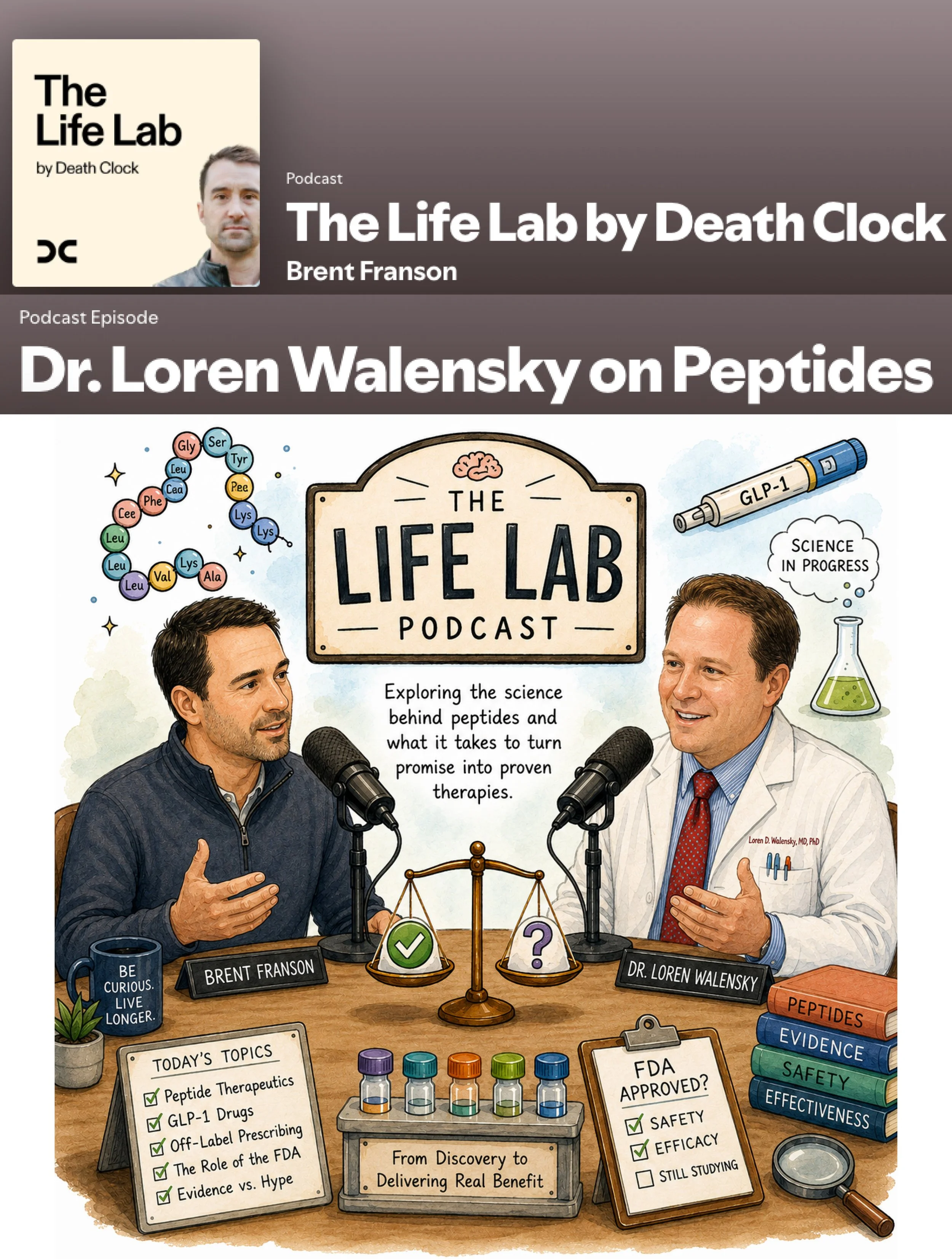
Dr. Walensky joined Brent Franson on The Life Lab podcast for a wide-ranging conversation about the rapidly expanding world of peptides. The discussion explores the science behind peptide therapeutics, GLP-1 drugs, off-label prescribing, the role of the FDA, and the critical distinction between understudied experimental compounds and therapies whose safety and effectiveness have been rigorously established.
Listen to the podcast on Spotify and Apple Podcasts.
-
June 1, 2026
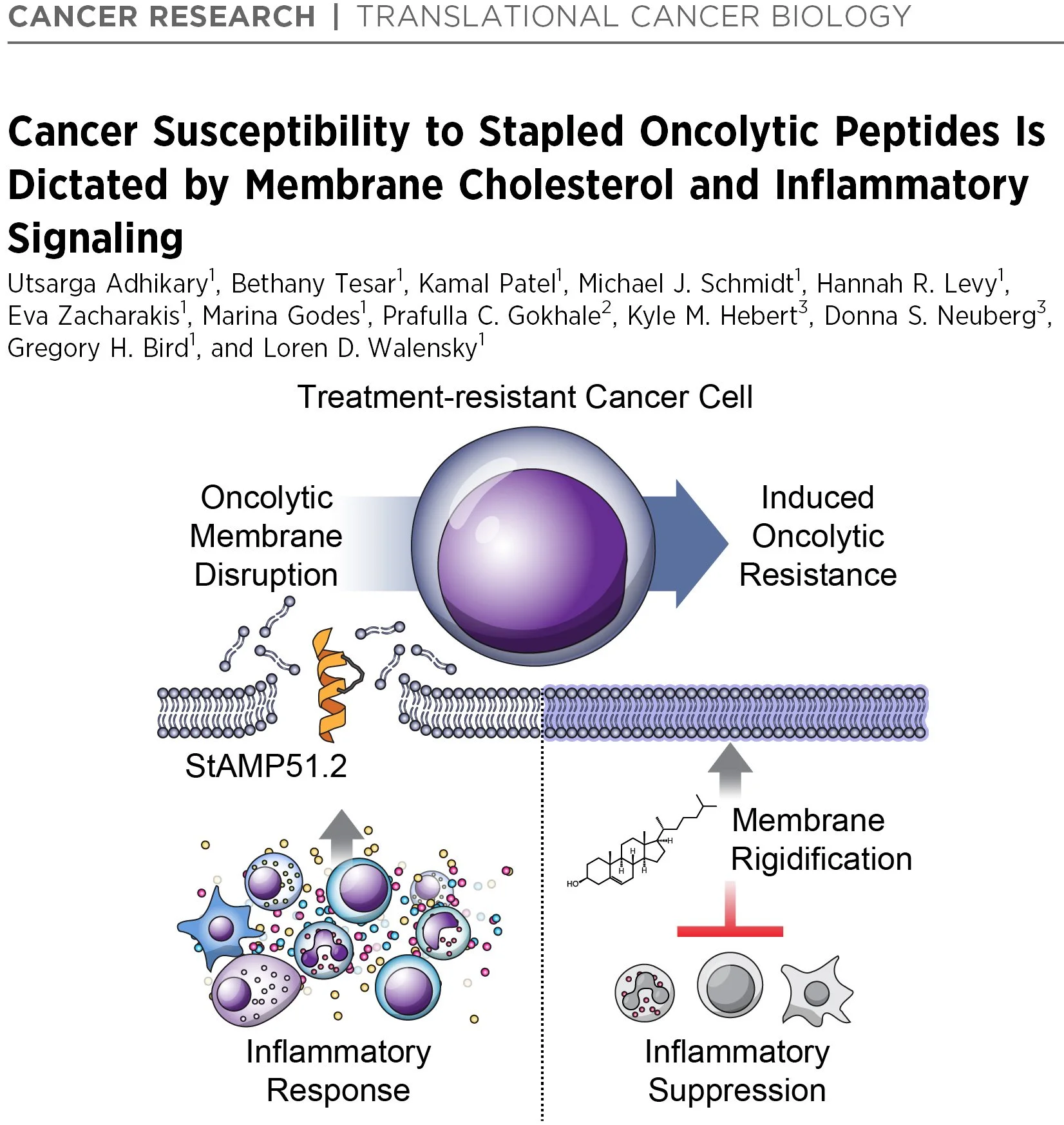
Congratulations to Tito and the team on advancing a new therapeutic strategy that targets the cancer cell membrane, an underutilized target with the potential to circumvent traditional mechanisms of treatment resistance. By repurposing StAMP51.2, a stapled peptide originally engineered to selectively disrupt bacterial membranes, we identified a lipid signature that predicts cancer susceptibility to rapid, proinflammatory membrane lysis and uncovered an unexpected link between membrane cholesterol, oncolytic resistance, and inflammatory signaling. StAMP51.2 also suppressed leukemia growth in vivo, highlighting the potential of stapled oncolytic peptides to combat treatment-resistant cancers.
Click here to read the paper.
-
June 1, 2026
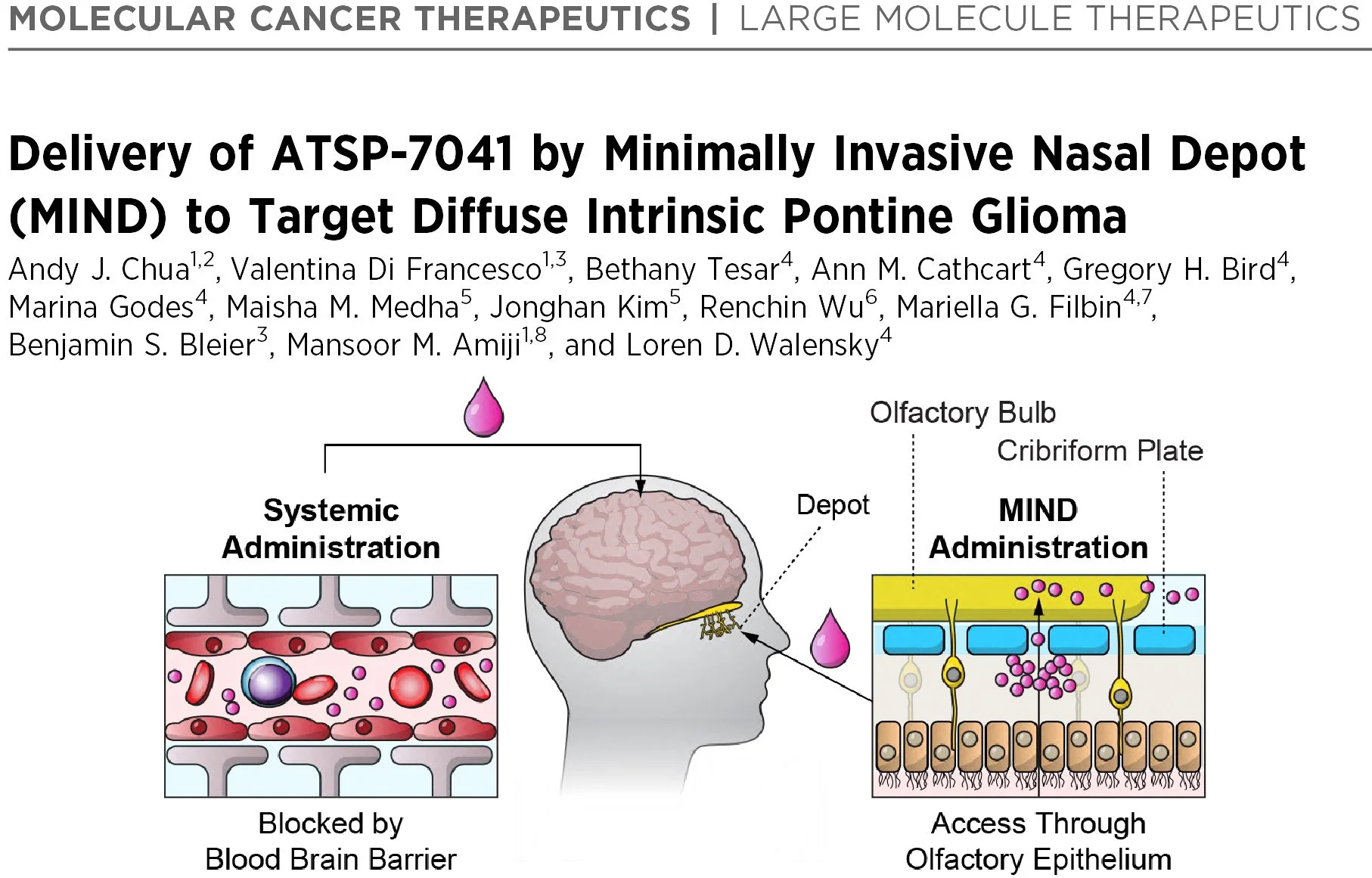
A longstanding challenge in treating diffuse intrinsic pontine glioma (DIPG) is getting effective therapies across the blood-brain barrier and into this devastating pediatric brain tumor. In collaboration with the Bleier, Amiji, and Filbin labs, we combined the minimally invasive nasal depot (MIND) delivery platform with ATSP-7041, a stapled peptide that reactivates p53 by blocking both HDM2 and HDMX. A single MIND-administered depot achieved sustained drug levels in the pons, suppressed tumor growth, and prolonged survival in a patient-derived DIPG model, providing proof of concept for a new strategy to overcome both drug resistance and restricted CNS access.
Click here to read the paper.
-
November 26, 2025
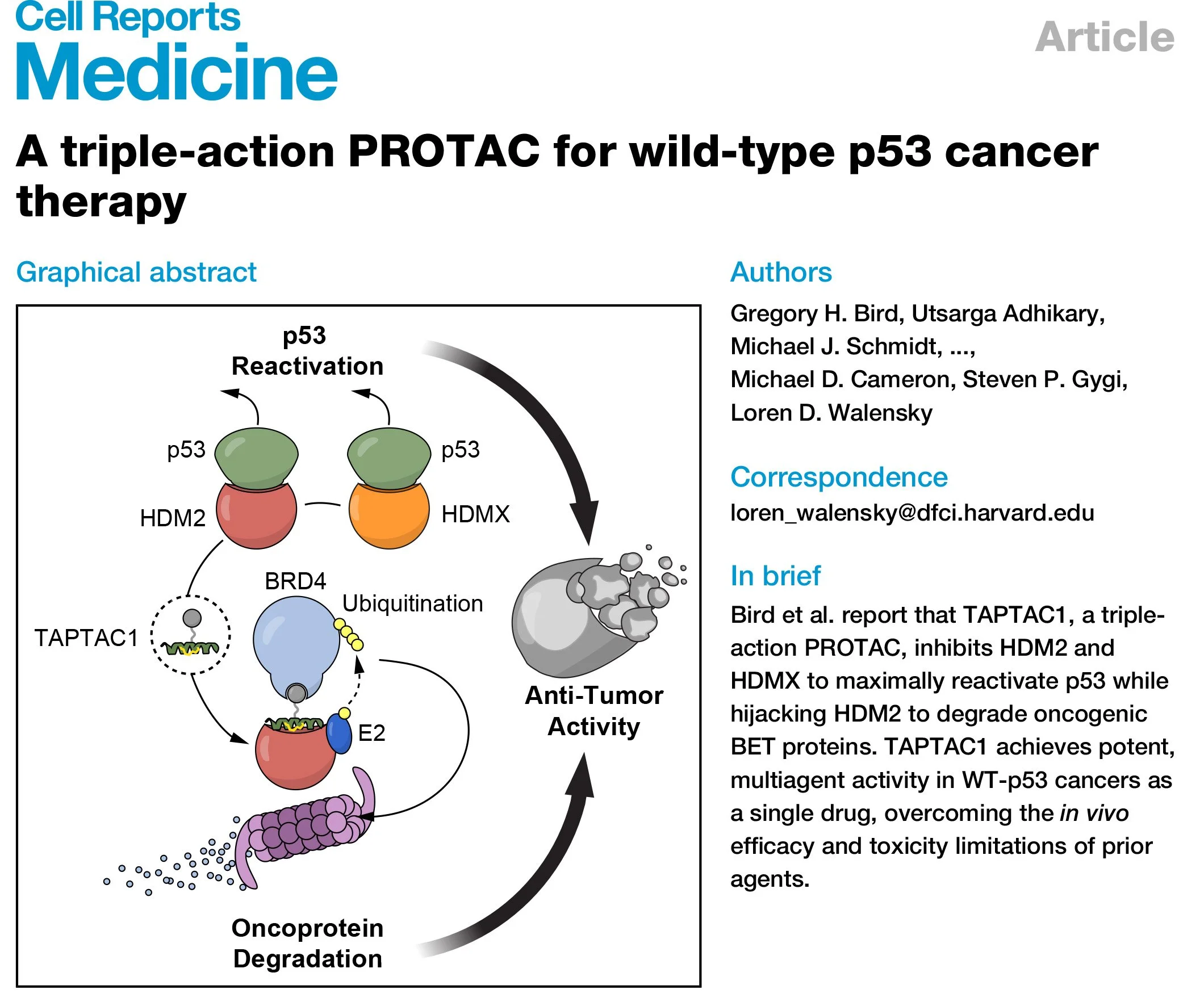
Congratulations to the team on advancing a new therapeutic strategy for wild-type p53 cancers, which represent nearly 90% of pediatric and 50% of adult malignancies. TAPTAC1's unique design unites stapled peptide and PROTAC technologies to simultaneously target HDM2 and HDMX to maximize reactivation of the p53 pathway while diverting HMD2 from p53 to instead degrade BET proteins, resulting in potent and selective anti-cancer activity across liquid and solid tumor models. Special thanks to the Harrington Discovery Institute for their key financial and advisory support throughout the development of TAPTAC1, along with pivotal funding from the William Lawrence and Blanche Hughes Foundation to advance next-generation therapeutics for pediatric cancers.
Click here to read the paper.
-
November 21, 2025
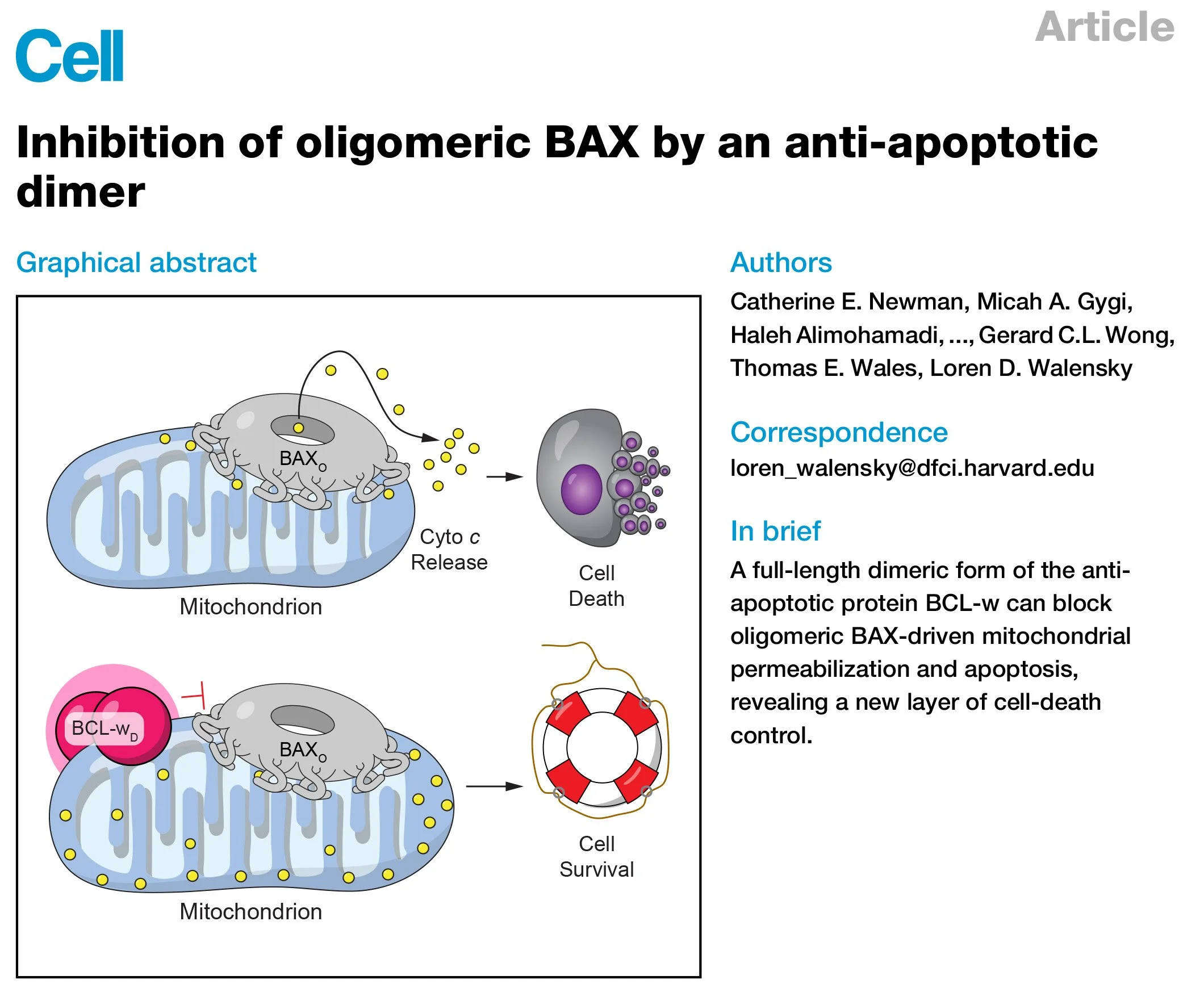
Congratulations to Cat Newman (MD-PhD graduate in Chemical Biology) and Micah Gygi (PhD Candidate in Biological and Biomedical Sciences) on the publication of their co-first authored paper in Cell, revealing a new layer of apoptotic regulation mediated by protein-protein and protein-membrane interactions between anti-apoptotic dimers and pro-apoptotic oligomers of the BCL-2 family. We are so grateful for the contributions to this work by the laboratories of Gerard Wong (UCLA), Thomas Wales (Northeastern University), Steven Gygi (Harvard Medical School), and Lixin Fan (NCI SAXS facility).
Click here to read the paper.
-
September 29, 2025
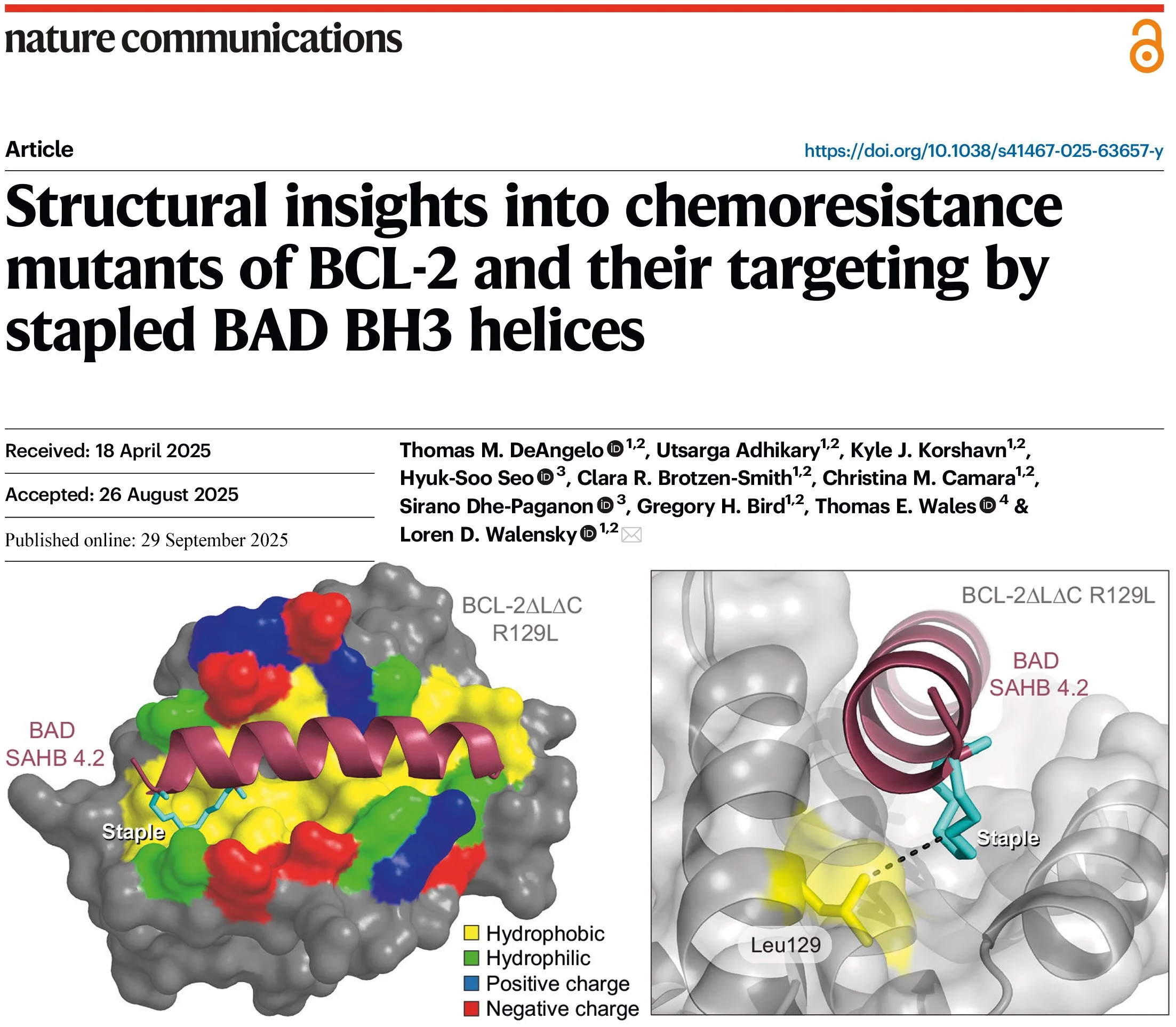
Congratulations to Tommy DeAngelo and the lab team on uncovering how venetoclax-resistance mutations alter BCL-2 conformation—and how stapled BAD BH3 helices can overcome these structural barriers to BCL-2 blockade. Lead stapled peptides preserve and even enhance binding across clinical variants, including through compensatory interactions of the hydrocarbon staple itself. The insights provide a blueprint for designing next-generation BCL-2 inhibitors capable of overcoming venetoclax resistance.
Click here to read the paper.
-
July 26, 2024
Congratulations to Sophia Tang and the entire collaborative team from the Walensky and Segal labs on the publication of a new strategy to tackle chemotherapy-induced peripheral neuropathy by targeting the IP3 receptor with a BCL-w BH4 mimetic.
Click here to read the paper.

-
January 17, 2024
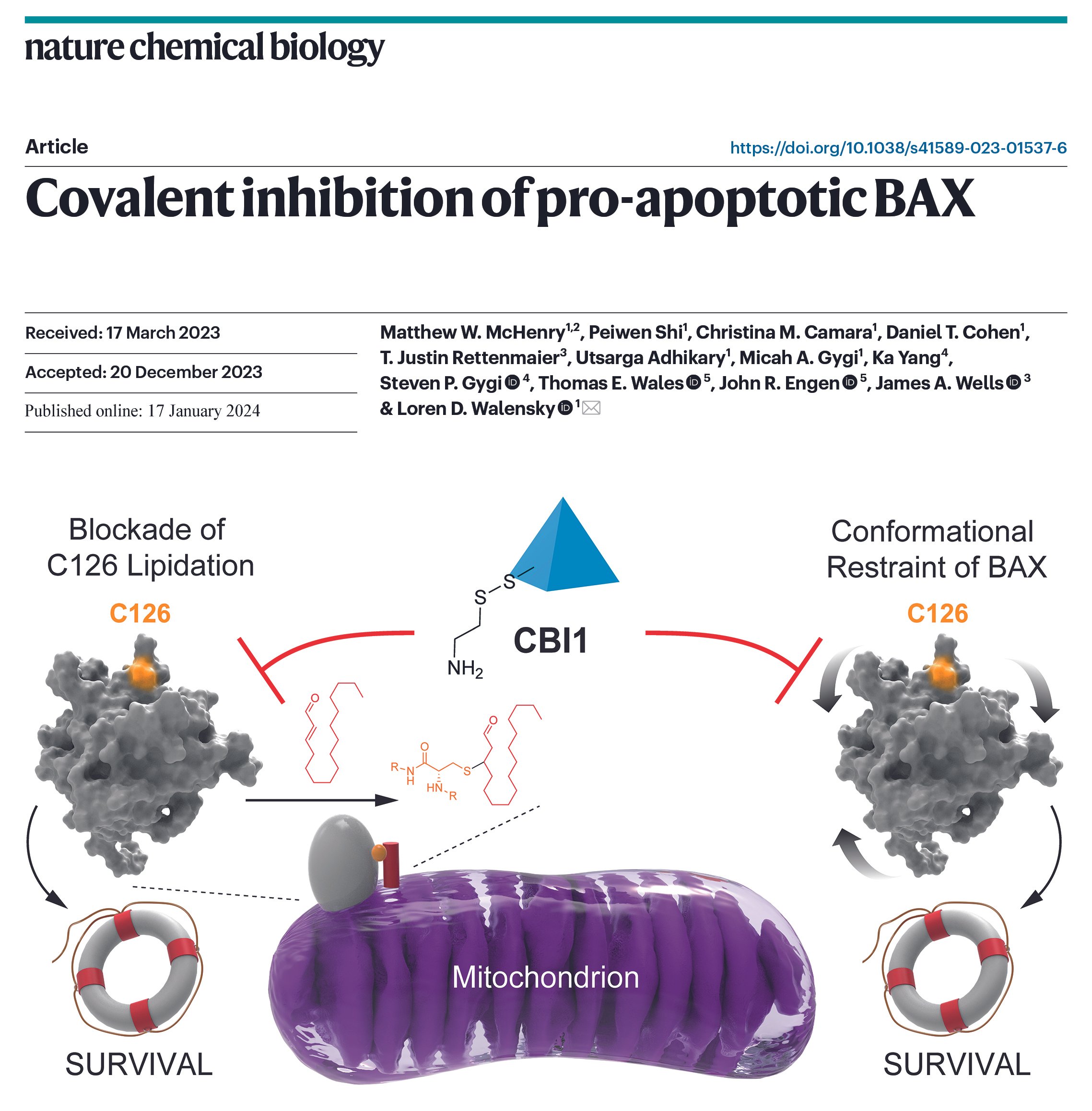
Congratulations to Matt McHenry on the publication of his PhD thesis research on the discovery of a small molecule covalent inhibitor of pro-apoptotic BAX, providing a blueprint for the development of therapeutics that can protect cells from premature or unwanted cell death.
Click here to read the paper.
-
January 9, 2024
Loren Walensky is interviewed by Kerry Kavanaugh of Boston 25 News about the lab’s novel stapled lipopeptide inhibitors of SARS-CoV-2.
Click here to watch the video.

-
January 4, 2024
Congratulations to Greg Bird and the entire collaborative team on advancing our stapled lipopeptide platform to combat highly pathogenic respiratory and hemorrhagic fever viruses of pandemic potential.
Click here to read the paper.

-
October 31, 2023
Congratulations to Tito Adhikary on the publication of his PhD thesis research study that reports a noncanonical role for MCL-1 in the regulation of DNA integrity and cell cycle progression.
Click here to read the paper.
